Is Everyone Hanging Out Without Me? (And Other Concerns)

I’ve been reading a lot of history and heavy fiction so I was looking for something light to read when I picked up Mindy Kaling’s Is Everyone Hanging Out Without Me? (And Other Concerns).  Prior to reading the book, I was completely unaware of Kaling’s talent beyond acting.  As an uncommitted fan of The Office, I had no idea that she has writing, directing, and producing credits on the show.  She is incredibly talented and hilariously funny — I was laughing out loud from page one (and even used the book as a pick-me-up the night that I spent too much time on social media concluding that I wasn’t doing enough to be as cool and accomplished as everyone else).  In the book, which is a series of essays, she shares:

– advice to teenaged girls who want to know how they can get a career like hers:

…please don’t worry about being super popular in high school, or being the best actress in high school, or the best athlete.  Not only do people not care about any of that the second you graduate, but when you get older, if you reference your successes in high school too much, it actually makes you look kind of pitiful, like some babbling old Tennessee Williams character with nothing else going on in her current life.  What I’ve noticed is that almost no one who was a big star in high school is also big star later in life.  For us overlooked kids, it’s so wonderfully fair.

– her very pragmatic take on marriage (after expressing her frustrations with complaints from the married):

What happened to being pals? I’m not complaining about Romance Being Dead–I’ve just described a happy marriage as based on talking about plants and a canceled Ray Romano show and drinking milkshakes: not exactly rose petals and gazing into each other’s eyes at the top of the Empire State Building or whatever.  I’m pretty sure my parents have gazed into each other’s eyes maybe once, and that was so my mom could put eyedrops in my dad’s eyes.  And I’m not saying that marriage should always be easy.  But we seem to get so gloomily worked up about it these days.  In the Shakespearean comedies, the wedding is the end, and there isn’t much indication of what happily ever after will look like day to day.  In real life, shouldn’t a wedding be an awesome party you throw with your great pal, in the presence of a bunch of your other friends?  A great day, for sure, but not the beginning and certainly not the end of your friendship with a person you can’t wait to talk about gardening with for the next forty years.

– a set of instructions for her funeral:

None of my exes are allowed to attend.  Distracting. Weird. (Okay, the only way I would even consider an ex attending is if he were completely, horrifically devastated.  Like, when he heard I died, it made him take a good hard look at his life and his choices, and he turned Buddhist or something.)

No current wives or girlfriends of my exes are allowed to attend.  This part is really, for real, non-negotiable.  They’ll just use the opportunity to look all hot in black.

In many ways I think Mindy and I are kindred spirits.  Like Mindy, I’m a child of immigrant parents, raised in the U.S.; I got out of chores by reading books; I will never let go of the memories of being picked on as a kid; I’m awkward around strangers’ babies; and I’ve seriously considered an invite list for my funeral (but who hasn’t…).  I also used to wear thick framed glasses (long before hipsters made them hip).  Now if only I had her comedic talents!

You can purchase Is Everyone Hanging Out Without Me? (And Other Concerns) at
Amazon
Barnes & Noble
IndieBound
Powell’s

Read This Essay: How to Slowly Kill Yourself and Others in America

Came across this incredibly moving, beautifully written essay: How to Slowly Kill Yourself and Others in America: A Remembrance by Kiese Laymon

I’ve had guns pulled on me by four people under Central Mississippi skies — once by a white undercover cop, once by a young brother trying to rob me for the leftovers of a weak work-study check, once by my mother and twice by myself. Not sure how or if I’ve helped many folks say yes to life but I’ve definitely aided in few folks dying slowly in America, all without the aid of a gun.

Read the rest here.

A few of my thoughts while reading this essay:
1. I want to be a better writer.
2. I hate being like his mother.
3. I hate loving those with this level of awareness (and those who without it…)

The Other Crucifix

It is in the American Centre at his secondary school that Jojo Badu first considers pursuing his postsecondary education in the United States.  His original plan was to attend the University of Ghana but with encouragement from the American Centre, he applies and is accepted to The University, a liberal arts college in Massachusetts. In the Summer of 1963 he leaves Ghana with the plan of obtaining an Economics degree and returning home to become a leader at a bank, another corporation or in the government as encouraged by his Uncle Kusi.
The novel starts with an older Jojo as he is reflecting on his life, more specifically his decision to come to and stay in America:

What if I’d stayed in Ghana, land of my birth, embodiment of my past?  What if I had gone to Ghana Law School, married a Ghanaian woman, bred children who spoke Asante and swam in the same waters as I, recognised the same landmarks as I did and my forebears before me?  What if I’d established my practice there; aged without the sense of abandonment rattling as chains on my heels and canvassed perhaps for a political office or two?

Within the first few pages, the tone is set for a pensive story about a Ghanaian man traveling to the U.S. in a time when no country seemed to be without some sort of political unrest. Ghana is 6 years out of British colonial rule but heading towards decades of political and economic instability and the U.S. is nearing the end of the official Jim Crow era and in the midst of the Vietnam War.  At The University Jojo meets 3 men who play a large role in his new life: Dwayne, a race-conscious and politically active black American student; Ed, Jojo’s first roommate is a rich kid who spends his college years fighting “the man” and trying to sleep with as many “chicks” as he can; and John, a racist white student who writes for an unsanctioned campus newspaper that has a conservative slant. Through his relationships with these three men (and other students) we see Jojo acclimate to U.S. racial tensions, experience foreign-ness amongst other black people, and deal with the basic realities of being a college student — studying, partying, dating.

As a child of two parents who both emigrated from Ghana to the United States for education in the same way that Jojo does, I appreciate this story.  However there were some chronological inconsistencies towards the end of the novel and I wish Jojo had shared more about his long distance interactions with his family.  Still yet, The Other Crucifix is a book I have already recommended to others.  

You can purchase The Other Crucifix at
Amazon
Barnes & Noble

My First Coup d’Etat: And Other True Stories from the Lost Decades of Africa

*Update: I wrote this post about a little over a week ago when John Evans Atta Mills, PhD was the sitting president of Ghana and John Dramani Mahama the Vice President. Yesterday afternoon it was announced that Dr. Mills had passed away. As deemed by Ghana’s 1992 Constitution, Mahama was sworn in as the President to serve the remaining 5 months of the term. You can watch his swearing-in here. You can read the Al Jazeera obit for Mills here. RIP.

***

It is a show of my humility Pan-African pride that as a Ghanaian I am admitting that my most recent enthusiasm and interest in African history should be attributed to a Nigerian woman. I’ll credit my parents for planting the seed with their stories of life in Ghana before they emigrated to the U.S. (where they met each other). But it was Chimamanda Ngozi Adichie who sparked something in me; who made African history fascinating, real, and something that I could discover on my own.
It was after watching Adichie’s popular TEDTalk, The Danger of a Single Story, that I was driven to explore her written work.  Of her two published novels, I decided to read Half of a Yellow Sun first.  It turned out to be a great decision; through nearly every scene of the novel, I called my sister, exclaiming that she must read the book when I was done. Without revealing too much of the plot, I would share with her the embarrassing moments in which I laughed out loud at humorous scenes in public or was pushed near to tears as the story of the Biafra War enters the lives of the novel’s characters. When I was done I knew I wanted to study African history — to learn the who’s, the what’s, the when’s, and the where’s. But how and when was a another matter.

When I met Adichie, I was in the midst of a tumultuous, on-again, off-again 2-year relationship with my Master’s thesis and at the time we were not on good terms. There was no way I could add on the task of learning history on my own with a thesis in progress, a full-time job, and my other commitments. I put the task off, while sporadically reading novels and short stories from an international perspective for pleasure. When I finally parted ways with my thesis, I dove head first into Ghanaian history. I started in the late 1940s with the Accra Riots, I took note of the major events and people who led us to March 6, 1957. At first forgoing the period under which Dr. Kwame Nkrumah was head of state, I started noting all of the heads of states which led Ghana, the coups through which they achieved power and the policies they enacted (I chuckled a bit at the straightforward naming of the agriculture policy which was supposed to help the nation become more self-reliant in food production — “Operation Feed Yourself”). I did this all through history texts available online and through U.S. American newspapers available at public libraries.

Through a post on Ghanaian author Nana Damoah’s blog, I knew that I should be expecting a memoir from Ghana’s current Vice President, John Dramani Mahama. As Damoah had noted, Mahama’s memoir would be history-making considering the paucity of memoirs from African heads of states. After reading the excerpted introduction and 1st chapter of the book, I pre-ordered the memoir (along with Benjamin Kwakye’s The Other Crucifix and Marilyn Heward Mills’s The Association of Foreign Spouses). I wanted to view Ghanaian history from a variety of narratives. I wanted to know the mood at the times of the various coups, the mass expulsions of Ghanaians from Nigeria, and other devastating changes to Ghana’s economic and political landscape during the ’60s and ’70s. It was one thing to read reports from American newspapers about the flogging of market women by soldiers under the Rawlings regime, it would be another to read more intimate accounts of brutality and harassment at the hands of these soldiers.

It is this intimacy through which Ghana’s history is told that make Mahama’s memoir special to me. The book feels like a collection of personal anecdotes with broader stories developed around them.  We start with a 7 year old Dramani who is lost and confused when no one picks him up from his boarding school during Easter vacation.  His mother who lives in the northern part of Ghana has no way of knowing that he’s been left at his boarding school in Accra and his father’s absence in the matter is a direct result of the military coup that occurred less than 2 months earlier.

Ghanaian politics remain ever-present through his life starting in childhood with his father serving as a Member of Parliament then as a Minister of State under Nkrumah.  But in the 17 chapters of the memoir, Mahama shows us some of the more tragic ways politics was a part of the everyday lives of all Ghanaians during the 1970s and 1980s — there is the military brutality against students protesting General Ignatius Kutu Acheampong’s proposal for a new style of government in Ghana; the ineffective “chit” voucher systems for purchasing food at state warehouses and the rising black market (“kalabule”); and the presence of the “Rawlings chain” (referring to the exposed collarbones resulting from hunger during the Rawlings regime) .  But it is not all heavy; there are stories of first crushes, indulging in popular music and enjoying discos, humorous tales of boarding school life, and the beginning of Mahama’s journey to politics including how he came to study History and Communications and his explorations of Socialism.

My First Coup d’Etat is a fairly quick and informative read for anyone interested in Ghana or John Dramani Mahama and it is a must-read for Ghanaians of the Afropolitan generation (those of us born and raised abroad); take a glimpse into a bit of Ghanaian history that explains why many of us are Afropolitans in the first place.

Read excerpts from the memoir here (click the Google Preview button) and here.  Purchase the book at

Powell’s
IndieBound
Amazon
Barnes & Noble

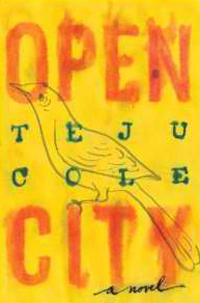
Open City

Back in February I emailed Teju Cole asking if there was any way I could get a hold of his novella, Every Day is for the Thief.  I’d read so many positive reviews about the book, I knew it contained Cole’s photography, and I knew the basic plot was something of interest to me: after many years abroad, a Nigerian returns to his home country for a visit.  I wanted to read the book and I thought my proximity to Cole (my Newark to his Brooklyn) at the time of my email would be an encouraging factor.  In the nicest way possible he responded that there would be no way for me to access the novella in the U.S.  I then phoned my mother, who was in Accra at the time, and asked her to check the shelves at Silverbird in Accra Mall.  The book was not there either.

In an effort to get closer to Cole’s literary self, I decided to purchase Open City — his debut novel that was originally published in 2011.  Considering the previous reviews I’ve read about the book which characterized it as boring and my thoughts after finishing the novel, I’ve come to two conclusions: (1) I appreciate what others may label as mundane and (2) though I’ve been aware of my high level of self-involvement for awhile, I didn’t realize that the outside perceptions of me as an asshole (which I’ve attributed to my introversion) may actually be true.

A little insight on what happens in the book:

Julius is a thirty-something year old psychiatrist, the son of a Nigerian father and German mother, he was raised in Nigeria but came to the United States for his postsecondary education.  When we meet him in Open City, he is a psychiatric fellow at New York Presbyterian Hospital.  Through what could very well be extremely detailed (and edited) accounts of Cole’s life from his diary, we tag along with Julius as he walks through NYC, recounts pieces of his relationship with his girlfriend and family, and as he travels to Brussels.

Thoughts on the book (from the perspective of someone who didn’t consider Julius an asshole until chapter 20):

I’m almost sure the novel originally ended at chapter 20 but they (the publishers? editors? agent?) didn’t want readers to walk away too disturbed or angry with the big reveal that occurs in chapter 20.  The official last chapter (chapter 21) took me back to the feelings I had for the book in the first 3 chapters.

When I first started the novel, I was upset with it’s pace and its focus and I noted the writing as dense.  I was not interested in the connections Julius was making between his everyday life and the art of dead white men or the animism of Yoruba culture and I didn’t know if I should direct my anger at Cole or at Julius.  Then in chapter four, there was one particular line that made me feel like I was getting to know Julius beyond his observations and occupation; while at work he reflects: “…I was oversensitive to the hospital’s white lights and felt more irritated than usual with the paperwork and small talk…”  It was a simple line but it was the first time Julius had ever said he felt a certain way and it resonated with me.  At chapter five, I felt fully engaged, primarily because of Julius’s interactions with two men — one a Haitian who worked as Shoeshiner at Penn Station and the other a Liberian detained at an immigration detention facility in Queens.

It was during his trip to Brussels that we met a more open Julius.  Perhaps because it is not a place he calls home that we see him making friends, fulfilling sexual needs, and having interesting discussions (including one that surprisingly makes Cosmopolitanism seem like an interesting topic for debate) yet still spending quite a bit of time in his head.  It was in these moments that I also began to see his insecurities and his coldness; he became more complex yet still evoked little emotion on my part as a reader.  It actually wasn’t until chapter 20 that I was really moved to feel something beyond recognition of myself in or annoyance for Julius.  It came after a moment of profundity which I will leave you with:

Each person must, on some level, take himself as the calibration point for normalcy, must assume that the room of his own mind is not, cannot be, entirely opaque to him.  Perhaps this is what we mean by sanity: that, whatever our self-admitted eccentricities might be, we are not the villains of our own stories.  In fact, it is quite the contrary: we play, and only play, the hero, and in the swirl of other people’s stories, insofar as those stories concern us at all, we are never less than heroic.

And so, what does it mean when, in someone else’s version, I am the villain? I am only too familiar with bad stories — badly imagined, or badly told — because I hear them frequently from patients.  I know the tells of those who blame others, those who are unable to see that they themselves, and not the others are the common thread in all their bad relationships.

Read an excerpt of Every Day is for the Thief here.  Read an excerpt of Open City here.
Purchase a copy of Open City at
Powell’s
Amazon
Barnes & Noble
IndieBound

Create Dangerously: The Immigrant Artist at Work

In the first pages of Create Dangerously: The Immigrant Artist at Work, Edwidge Danticat opens with a descriptive recounting of the execution of Marcel Numa and Louis Drouin.  Though these two men, members of a guerrilla army fighting against then-president Papa Doc Duvalier, were executed before Danticat’s birth, she considers their story one of her “creation myths” – a story that haunts her, that she obsesses over.  Since her memory cannot take her back to 11/12/64 – the date of the execution, she has filled in the details of their story with photographs, books, films, etc.

Like her character, Yannick, in Stones in the Sun, Danticat has committed herself to being a witness to Haitian history.

In reading that first essay, from which the book takes its title, and the ten essays that follow, I began to piece together ideas that had been circulating in my mind: Kalamu’s essay on the value of being immersed in an era/culture; the sincerity and necessity of art as activism; and the types of commitment and sacrifice that artists are required to make.

In the essay entitled Walk Straight, I see the origins of Night Talkers (a short story from Danticat’s The Dew Breaker).  The essay starts as Danticat is traveling through the mountains of Léogâne to visit an elderly and fiercely independent aunt (who talks in her sleep).  One of the most personal of all the essays, Danticat shares that it was during this visit to her aunt that she wrote the addendum to Breath, Eyes, Memory — a letter to Sophie, the novel’s main character:

I have always taken for granted that this story, which is yours and only yours, would always be read as such.  But some of the voices that come back to me, to you, to these hills respond with a different kind of understanding than I had hoped.  And so I write this to you now, Sophie, as I write it to myself, praying that the singularity of your experience be allowed to exist, along with your own peculiarities, inconsistencies, your own voice.

In my notes, I jotted down that Edwidge is my sister-aunt, because after being a fan of her work for half of a decade, this is the first time I’ve truly seen her and empathize with her.  In discussing some of the backlash she’s received from within Haitian communities, I see more than an award-winning writer that I look up to; I see a woman who struggles with the responsibilities of her writing gift and with her Dyaspora1 duality.

The honesty that exists in this more personal essay pervades the entire collection.  In a most truthful way, Danticat shows the complexities of herself, her family and her mother country in each essay of the collection.  There are no overly romanticized reflections nor are any of the recounted stories littered with bitterness.  Through essays on political violence, family, art, and natural disasters, Danticat’s eloquence permeates.

Read the first chapter here.

1Dyaspora is a term used to describe Haitians living outside of Haiti; it sometimes has a derogatory connotation like Akata.

Purchase the book here:
IndieBound
Powell’s
Barnes & Noble
Amazon

Akata Witch

You can read the plot synopsis and my initial thoughts of Nnedi Okorafor’s Akata Witch here.

I read Akata Witch a few months ago and I meant to write a piece about being a U.S. born Ghanaian soon after.  In all honesty I’m a bit worn out by the discussions.  African vs. African-American and all of its variations.  I’ve reached a point in my life where I’m okay with not fitting into one category or another and I honestly don’t think anyone really does.  But if you’re not yet there — if you’re are struggling with your racial/ethnic/cultural identity, I’m going to introduce you to a timeline of events you can expect to go through before you reach a level of not caring:

  • When you’re in elementary school, you’ll learn the process of Americanizing your name for easy pronunciation.  However your first encounter with a substitute teacher will throw you for a loop.  The substitute teacher will mispronounce your name and everyone will laugh.  Next time you’ll know to arrive at class early to give her your Americanized name or you’ll interrupt her with a loud “HERE!” after she utters the first syllable.
  • You will notice that, beyond your funny sounding name, you really are different from your schoolmates.  This can happen as early as elementary school if your parents boldly denounce assimilation by doing things things like sending you to school with banku and okra soup for lunch.
  • You will discover that being born in the States but connected to elsewhere makes you kind of unique in a good way.  This typically happens in college.  You will join cultural organizations on campus where you and your colleagues put together events in the best imitation of those parties and ceremonies your parents have been taking you to since you were a child.
  • You will visit “home” for the first, maybe second, time in your life and will be reminded that you are different.  You’ll be annoyed when strangers call you American girl with absolutely no hesitation.  Your annoyance will be furthered by everyone’s obsession with your skin complexion and refusal to relax your hair.
  • College is over and you are introduced to another type of lonely.  It’s no longer as easy to connect with people “like you.”  Though you will try with paraphernalia that says what you cannot or by boldly approaching people you hear speaking you mother’s language.  If you’re lucky, they’ll be passive in their rejection.
  • In your loneliness new free time, you discover amazing people who seem to be documenting your experience.  You meet characters like Sunny in Akata Witch who live in more than two worlds that seem to be in opposition of each other.  You recall each encounter in which you have been told “you’re not _____ enough.”  You come to a conclusion that this is all a game of hierarchy built on arbitrary rules of Africanness.  You decide that you equally love grilled cheese sandwiches and spinach stew and will never choose one over the other.

This duality is really a magical place to exist.

*
You can purchase Akata Witch at:
IndieBound
Amazon
Powell’s
Barnes & Noble

Event Recap: National Black Writers’ Conference 2012

I went to this year’s National Black Writers’ Conference specifically for the panel entitled Migration and Cultural Memory in the Literature of Black Writers

I was late to the panel and though I did miss some stuff, I think I got the goods:

Nana Ekua Brew-Hammond on migration:
We often talk about black migration in a physical sense (Africa -> the West; southern US -> northern US; the West -> Africa) but we also migrate in a mental sense. We migrate daily from our communities to [white] institutions (schools, workplaces, etc.), where we have to adjust the way we speak, dress, etc. As writers, however we migrate, be it mental or physical, it ends up on the page.

She also talked about the contradictory images of Africa she received growing up in the U.S. She would see her parents’ very cosmopolitan photos from Ghana and hear her parents talking about how wonderful Ghana is (though not discussing why they are in the States if Ghana is so wonderful) and at the same time she would see images of “starving Ethiopians” and various people trying to save them. Though I’m a few years younger than Nana Ekua, I completely relate. My mother has the awesome images of herself and her friends from before she emigrated from Ghana to the U.S. but outside of my family, I only received very tragic images of Africa. I’m sure this is something a lot of black people throughout the diaspora can relate to.

A moment of elitism during the panel:
During the Q&A, a man stood up, noted that he’d published several books and asked the panelists for their advice to up and coming writers. One panelist caused a little controversy when she responded that everyone was claiming to be a writer and the importance was in the study — writers need to study and develop technique. She saw the increasing number of self-published works as pollution. Ouch. The man who initiated the discussion took it personally which I understand. I agree that study and technique are important but I have no beef with the self-publishing world or with the supposed universal claim of “writer.”

A fact I was unaware of:
One of the last events of Saturday’s programming was a conversation between Esther Armah and Tavis Smiley. In a story Tavis was sharing about Toni Morrison he said that she didn’t get started until she was 39 or 40. I searched the internet for her writing history, when I got home, and discovered that her first novel was published when she was about 40 years old. I had no idea! but it’s inspiring.

For images of the conference, check the NBWC Facebook Page. And here is another short recap of the conference.

Silver Sparrow

Silver Sparrow is a story about family — about relationships between husband and wife, between sisters, and between mother and daughter.  It’s about many of the relationships through which I have experienced family.

I was born between a vibrant, older sister and a charming, younger brother.  We were raised by a shy yet comedic father and a spirited and bold mother.  I love them all.  But familial relationships are never perfect and coming to terms with this fact is part of the transition from childhood to adulthood.  Tayari Jones’s Silver Sparrow was a perfect literary piece for my own transition.  Here are some of her words that I made sure to take note of:

Read More »

Event Recap: Artists at Work: An Afternoon with Edwidge Danticat

Last weekend, Philadelphia’s Art Sanctuary hosted Artists at Work: An Afternoon with Edwidge Danticat. The event featured a panel discussion moderated by April Silver with panelists: spoken word artist Michelle Myers, visual artist James E. Claibrone Jr., bassist Jonathan Michel, and writer Edwidge Danticat.

A few insights I gained from the panel:

On speaking for/with a community:

I see myself as speaking as part of a chorus — the more voices that join, the more enlightened we are… saying that I am the voice of a non-monolithic, complex people silences other people’s voices. – Edwidge

Join the chorus. Don’t allow anyone to silence your voice and don’t attempt to silence anyone else’s voice.

When people lay claim, they sometimes want to dictate what I write about… – Michelle

I get excited when someone is able to put my thoughts into words but then sometimes I have expectations for them to continue to do this. It’s an unfair burden for artists.

We internalize negative images of ourselves [from popular media] and then celebrate it… [We need] to invest in and create righteous art/images – James

*a lightbulb moment for me*. When James made this comment I realized that countering negative stereotypes is not just about being accepted by the “other” but also about not internalizing negativity.

Advice to “aspiring” artists on the importance of study and discipline:

Study is paradigm to what we do…discipline comes from the love of what we do… Learn from the elders; we are not innovators, we are continuing the tradition – Jonathan Michel

I love Jonathan for this comment because it made me realize that my writing is bigger than me. Writing is something that comes naturally to me and I indulge in it as a form of therapy. But if I’m going to acknowledge writing as my calling then I need to recognize the duty that comes with it. *a true lesson in humility*

As a follow-up to Jonathan’s comment on learning from the elders: Study their grace, not just their work, but the way their personhood embodies their work. – Edwidge

This was an important message for me to hear. Though my name means grace I’ve let my ego and my insecurities create a version of myself that is anything but graceful and disconnected form my work.

*
This was originally posted on The G is for Grace