Stones in the Sun

History is a nightmare from which I am trying to awake.1

Patricia Benoit’s feature film debut, Stones in the Sun, is a beautifully sad story that sheds an intimate light on Haitian emigration to the United States. The film shows 3 relationships, split by political turmoil in Haiti as they are reunited in New York. Though all of the characters have experienced trauma rooted in the same source, they struggle with understanding each other’s pain.

Young Lovers
Tambay’s prediction that we’d see something like Edwidge Danticat’s collection of short stories, entitled The Dew Breaker was spot on. The first pair we are introduced to are a young, married couple whose story resembles, but does not replicate that of the couple we meet in Danticat’s Seven. The young man, a livery cab driver in Brooklyn, had just become a member of an electoral board in Haiti when the military came looking for him. He was able to escape their violence but unknowingly left his wife unprotected from it.

Two Sisters
When Yannick, played by Edwidge Danticat, shows up at her older sister’s home one night, she does so with no luggage. Without going to deep into her political activism, she explains to her curious niece that travelling light was a consequence of rushing to escape the “bad people” who were after her. Yannick’s sister doesn’t appreciate this honesty, as she’s invested a lot in actively denying her traumatic experiences in Haiti — experiences she tried to shield her younger sister from and now would like to shield her daughter from.

A Father and Son
Wòch nan dlo pa konnen doule woch nan soley2. These first words of the film, are uttered by Gerald, a radio show host in Brooklyn. With his progressive politics, Gerald uses his show to inform Brooklyn’s Haitian community about the day-to-day political situation in Haiti. However when his father arrives from Haiti, he’s forced to confront some of his hidden personal history and the realities of a family with members on opposing political sides.

A cinematic history lesson, Stones in the Sun shows how political forces can affect us in the most intimate ways. It’s a moving story that touched me on so many levels. I walked away from the film with inspiration and more questions for my writing, inspiration for intimacy, and more knowledge of Haitian history and Haitian-U.S. relations. (I plan on sharing more about this on my personal blog).

There are plans for more festival screenings of the film with the goal of distribution, so hopefully this film will be viewed by a wider audience. I’ll be watching the film’s Facebook page for updates.

1from James Joyce’s Ulysses; quoted by Yannick in Stones in the Sun
2Stones in the water don’t know the suffering of stones in the sun

On My Radar: Faire L’Amour

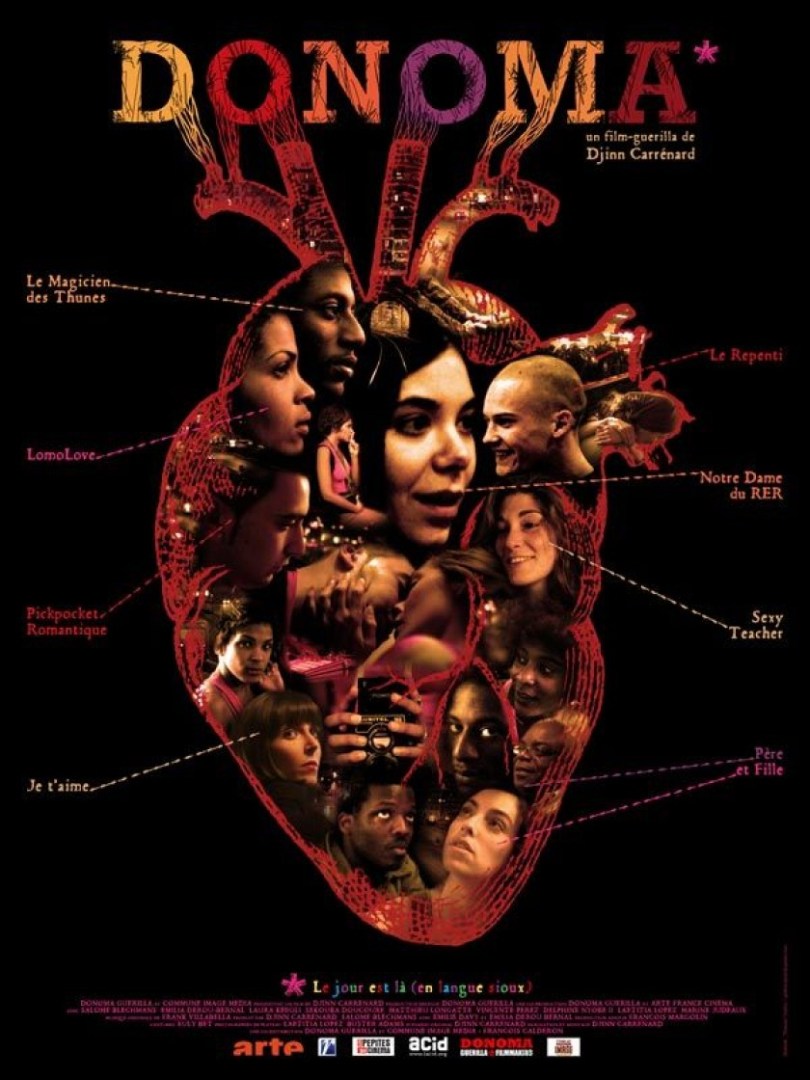
At the end of the the post-screening Q&A of Donoma, Djinn Carrénard let us know that he would begin shooting his next feature length film as soon as he returned to France.  Like Donoma, the new film would be on the topic of love but more so focused on the day-to-day aspect of love and how couples can grow to hate each other.

I’m in!

Now from Cineuropa (via Shadow & Act), we get a more detailed synopsis:

Oussmane is a musician losing his hearing in a loveless relationship with Laure, an air hostess desperately trying to get pregnant. Kahina is a young woman doing time in a prison somewhere in Ile de France who gets leave for a week to spend Christmas with her four-year-old daughter. Oussmane and Kahina will fall in love during this week on leave, clinging on to each other with the passion of their instinct to survive. Kahina can’t see her daughter, Kahina falls in love, Kahina has to return to prison.

Restless City

When I first saw Hype Williams’ Belly, I considered it one of the best movies of the time.  It featured my childhood crush, Nas, and it had scenes lit in blue and shot from crazy angles.  It was one of the most visually enticing films of my youth.  In college, a friend introduced me to the tragedy that is Belly: “that was just a long ass music video.”

Damn, he was right.

To this day I still have love and respect for Hype Williams and Belly but the reality is that in my initial, immature viewing of the film, I overlooked the flaws of the story.

Fast forward more than a decade from Belly‘s release, I’m still a sucker for appealing visuals but I also value being drawn into a film with a good storyline and well-developed characters.

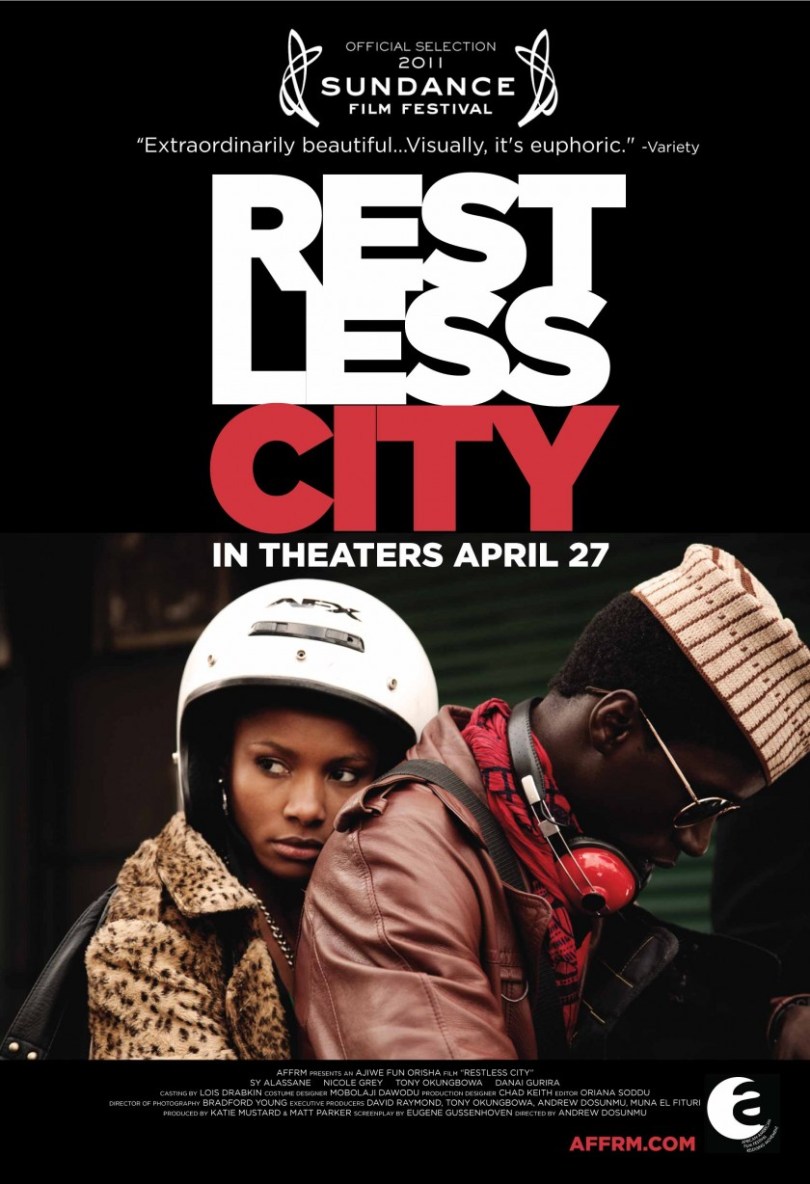
So when I first saw the trailer for Restless City, the visuals had me hooked but I also acknowledged that the I didn’t get a feel for the story without reading the written synopses.

Restless City director, Andrew Donsunmu, has quite a few creative titles associated with his name including fashion photographer and music video director.  I have no doubt he knows the value of visuals in telling stories and evoking emotions.  Paired with cinematographer Bradford Young, I had huge expectations of what I would get from Restless City.  Just check these clips that were released in advance of the film’s opening night:

Unfortunately, after all of this visual seduction, I was a bit disappointed when I walked out of the screening.  I thought the visuals were amazing but the story seemed to be lacking so much.  I didn’t feel at all connected to it or moved by it.  I appreciate quiet movies (Medicine for Melancholy and Donoma are two recent ones that come to mind), but the story was far too quiet and too subtle for me to really feel anything.

In the hours following the screening, I couldn’t stop thinking about my failure to connect, especially given all of the positive reactions the film received.  Was my disappointment actually a projection of my idea of how a story should be told?  Was the positive response to the film, a desperate need to see an alternative view of blackness on the big screen?  Maybe I should give it another chance and go see it with absolutely no expectations.

Then I read Britni Danielle’s interview with Donsunmu.  First, he shares some swoon-worthy comments about not making films in Hollywood:

I haven’t actually tried to get a film made in Hollywood… my world exists outside of that machine, for now. I have one main responsibility: to explore the depths of people, for better or worse. I want to go deeper into what makes us tick, what makes us laugh, cry, grow, grieve, evolve

I definitely respect him for what he sees as his responsibility and his rejection of Hollywood even if it’s just “for now.”

As the interview continues, he describes what he wants viewers to get out of Restless City:

I would like viewers of RESTLESS CITY to just see themselves in the characters, to feel a sense of familiarity with the story, to be curious about how it continues after the last frame. I would like viewers to feel at home in the story, to see my NY, and to understand the nuances of the NY they may never look at closely.

Now I’m back to being confused because Donsunmu’s comments suggest that he expects viewers to view this film in the same we do with other films told in a traditional manner.  So I guess I wasn’t projecting my ideas of how a story should be told.

I had no curiosity about how the story continues after the last frame; however, the film did inspire thoughts about the unique experiences of African immigrants in NYC.  I’ve always been curious about the vendors on 125th St, on Canal St, and in Koreatown.  And given my experiences in African communities in the southern U.S., I’ve always been envious of the more developed African communities in NYC; I’ll credit Restless City for showing me some of the drawbacks and grittiness of this “development.”

I know as artists, our craft is constantly developing and evolving.  So while I’m unsure if I will go see Restless City again in theater, I’m definitely going to look out for future works of Donsunmu as his craft continues to evolve.  If anything, Restless City gave me enough of a taste for that.

On My Radar: Boneshaker

From the film’s site: Boneshaker follows a Ghanaian immigrant family taking a road trip to a Pentecostal church in Louisiana to cure their violent daughter. As the family journeys to a tent revival at the ends of the levee-less Louisiana delta, they discover the complications of trying to perform a traditional ritual away from home. Boneshaker focuses on the feelings of homelessness, landlessness, and rootlessness that accompany immigration.

More:
the video for the Kickstarter campaign that funded the film and
an interview with the director, Frances Bodomo.

I’m ready for this.

P.S. If you’re a Miranda July fan, check out this other short from Frances Bodomo:

On My Radar: Just A Band: The Movie

Wanuri Kahiu, director of sci-fi short Pumzi, and Anjali Nayar are working on a documentary about Just A Band.  Kahiu describes the project as:

… a kaleidoscopic portrait of four artistically eclectic twenty-somethings who form Kenya’s super nerdy Afro-electro-pop group Just A Band. The film follows them through projects and performances – from their out-of-control street parties in downtown Nairobi to the making of their blaxploitation music-mentry HA-HE, which became Kenya’s first Internet meme.

If you aren’t familiar with Just A Band, check them out:

Donoma

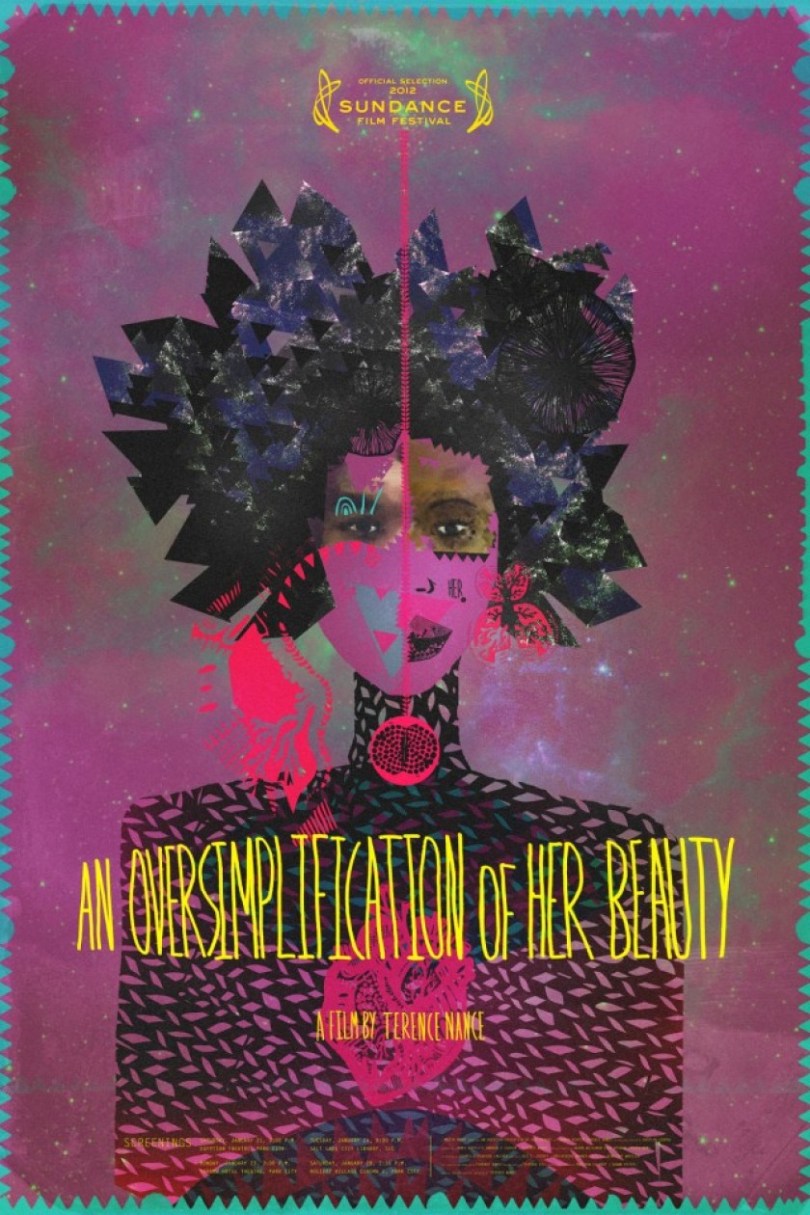
I have yet to fully explore this but I’m starting to think that I have an inclination for indie films about love created by black men.  Theodore Witcher’s Love Jones.  Barry Jenkins’ Medicine for MelancholyTerence Nance’s An Oversimplification of Her Beauty.  And now Djinn Carrénard’s Donoma, which I caught at New Directors/New Films:

Donoma exists without a translated trailer and only a few clips with English subtitles.  It was mostly through images that Carrénard got my attention.  When I added Donoma to M&W’s viewing list, I noted “love triptych. Paris.”  Limiting my brief synopsis to three words wasn’t intentional but upon reflection, it uses very little to say a lot as does Carrénard with this feature debut.

Three women, three interwoven storylines create this enticing guerrilla film.

Enticing because Carrénard respectfully breaks the rules of traditional storytelling.  In each of the three stories, Donoma shifts back and forth between present and past sometimes quickly and with little or no transition.  He, then, ends the film without any resolve but in a fashion I haven’t been able to appropriately name in brief.  Rather than easing you out of the story or offering some metaphoric conclusion with an obvious meaning, Carrénard ends the film in the midst of great emotion.

Though the non-traditional aspects of the film and 133-minute runtime can be mentally demanding, Donoma allows you to consider your own ideas about love without being overwhelmed.  Carrénard, who was studying philosophy when he realized he was a filmmaker, makes this allowance by introducing his thoughts on love very subtly throughout the film.

Though the three stories are meant to discuss different types of love (the passionate, the day-to-day, and the religious kind), one audience member noted, during the post-screening Q&A, that all three women were disturbed in some way.  In response to this Carrénard first joked that this was a result of having two sisters, then more seriously he responded that because he is a man, anything he creates involving women will be misogynistic.  It’s only upon reviewing his work is he able to see the misogyny.  Though misogyny is an intense word, I think Carrénard’s point was to acknowledge the male privilege he holds while creating his female characters.

Continuing on the point of saying a lot with a little, it’s been reported that Donoma was created on a budget of $200.  In the post-screening Q&A, Carrénard explained how he was able to make the film on such little money.  Everything that he used to make the film was either borrowed or gifted.  He only came up with the $200 figure after being pressed at Cannes about the film budget and being reminded by a crew member about the tuxedo – a $200 tuxedo was used in a scene that was later cut from the film.  (If this isn’t inspiration for every artist, I don’t know what is.)

For those curious about the film’s name:  Donoma is a Sioux word meaning the day has come (according to Carrénard) or similarly, sight of the sun (according to a bunch of random internet sources).  Carrénard chose to use a Sioux word because the name of his birth country, Ayiti (Haiti), has origins in a language of people indigenous to the Americas as well.

There is no word on an American distributor as of yet but I’m hopeful since it did go to theaters in France after its Cannes debut.  If you’re in the NYC area this week, you can catch it at BAM’s Ghett’Out Film Festival.

An Oversimplification of Her Beauty

An Oversimplification of Her Beauty is screening at several festivals over the next few months (click here for more details).  Below is a synopsis, teaser trailer, and some reactions to early screenings of the film.

A quick synopsis: An Oversimplification is a visually engaging film about love, based on real life events involving a boy named Terence and a girl named Namik.  The story is told with animation, documentary-style footage, live action, and narration.  Check the teaser:

Reactions to the film:
Tambay Obenson (Shadow & Act):

They say that there’s something of every artist in the work they create, whether a conscious decision or not; and the act of creating with the intent to surrender your creation (and in essence a piece of yourself) to a potentially scrutinizing audience, requires some degree of courage on the part of the artist; but I would further say that it takes a certain amount and kind of bravery to intentionally insert oneself (both literally and figuratively) completely naked (physically and emotionally) into one’s work, and then publicly present the completed work to not only family, friends and acquaintances, but also perfect strangers.

Although there is also risking the possibility (or danger even) that some may consider it more of an arrogance and pretentiousness than bravery; but some artists may actually embrace that interpretation as well.
Terence Nance’s feature film debut straddles that line, both in terms of content and structure…

*****
LaToya Peterson (Racialicious):

Refreshingly, black women are Nance’s muses. Often in cinematic depictions of black love, the relationship is construed as adversarial. Here, as Nance documents the many loves that fit his archetype of “brown, maternal, well read, well traveled,” black women take center stage, his love for each of them palpable through the screen.

*****
Me! (G is for Grace):

I was affirmed [by An Oversimplification of Her Beauty].  Prior to the screening, I spent a good part of the day, in my head, defending myself against someone’s insinuation that I’d done too much (shown too much interest, love, attention).  The film helped me let some of that go.  Things between Terence and Namik seemed pretty intense.  The word “love” was used between the two which kind of shocked me because I resist using that word too early on with people, especially with folks that I have romantic interest in.  The film led me to something like a revelation about using the word: spiritually, we can only give [out of] love; there is no such thing as giving [out of] like.

On My Radar: Alaskaland

From the film’s Facebook Page: After a tragic accident, Chukwuma, an Alaskan-raised Nigerian, is separated from his younger sister, Chidinma, who moves to Nigeria with their Uncle until she becomes of legal age. Two years later, the siblings reconnect to find their estrangement has created new personal and cultural frictions in ways that bring them closer to each other and their roots, as well as help them define what it means to be a Nigerian in Alaska.
Written & Directed by Chinonye Chukwu

The Future

The Future is about a couple, Jason and Sophie, who’ve been together for four years. Both are 35 and, whilst preparing to adopt a cat, realize that life is soon coming to an end. Thirty days before the cat, named Paw Paw, is to come home with Jason and Sophie, they quit their jobs and embrace the option of living more fulfilling lives.


Read More »