In the same way that I’m intrigued by stories and mythology about African people flying, our connection to water is a mystery that resonates with me.
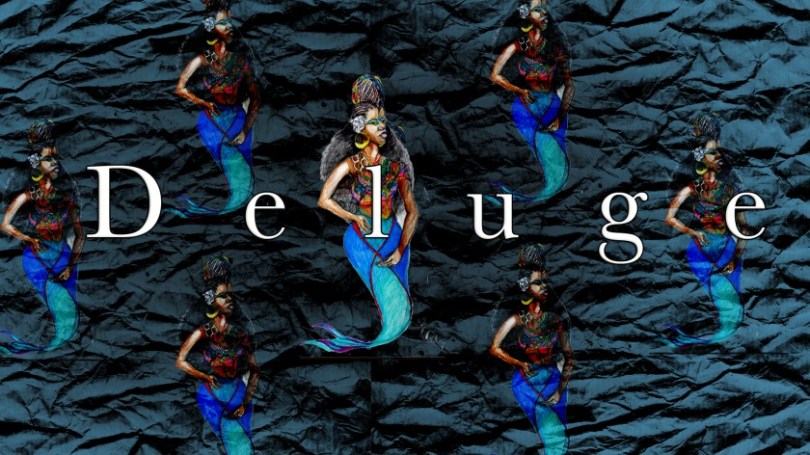
From Nijla Mu’min (I linked to her poem in Web Finds, here): This film, which centers on Tiana, a 14-year-old girl, who after witnessing the mass drowning of her friends is introduced to an aquatic underworld in the wake of the tragedy. This film is a mixture of coming-of-age drama, magical realism, and realism and will be shot in and around New Orleans.
The film is currently in pre-production and raising funds on IndieGoGo.
Also, check out this blog post from Nijla about a recent experience while location scouting.
History is a nightmare from which I am trying to awake.1
Patricia Benoit’s feature film debut, Stones in the Sun, is a beautifully sad story that sheds an intimate light on Haitian emigration to the United States. The film shows 3 relationships, split by political turmoil in Haiti as they are reunited in New York. Though all of the characters have experienced trauma rooted in the same source, they struggle with understanding each other’s pain.
Young Lovers Tambay’s prediction that we’d see something like Edwidge Danticat’s collection of short stories, entitled The Dew Breaker was spot on. The first pair we are introduced to are a young, married couple whose story resembles, but does not replicate that of the couple we meet in Danticat’s Seven. The young man, a livery cab driver in Brooklyn, had just become a member of an electoral board in Haiti when the military came looking for him. He was able to escape their violence but unknowingly left his wife unprotected from it.
Two Sisters
When Yannick, played by Edwidge Danticat, shows up at her older sister’s home one night, she does so with no luggage. Without going to deep into her political activism, she explains to her curious niece that travelling light was a consequence of rushing to escape the “bad people” who were after her. Yannick’s sister doesn’t appreciate this honesty, as she’s invested a lot in actively denying her traumatic experiences in Haiti — experiences she tried to shield her younger sister from and now would like to shield her daughter from.
A Father and Son Wòch nan dlo pa konnen doule woch nan soley2. These first words of the film, are uttered by Gerald, a radio show host in Brooklyn. With his progressive politics, Gerald uses his show to inform Brooklyn’s Haitian community about the day-to-day political situation in Haiti. However when his father arrives from Haiti, he’s forced to confront some of his hidden personal history and the realities of a family with members on opposing political sides.
A cinematic history lesson, Stones in the Sun shows how political forces can affect us in the most intimate ways. It’s a moving story that touched me on so many levels. I walked away from the film with inspiration and more questions for my writing, inspiration for intimacy, and more knowledge of Haitian history and Haitian-U.S. relations. (I plan on sharing more about this on my personal blog).
There are plans for more festival screenings of the film with the goal of distribution, so hopefully this film will be viewed by a wider audience. I’ll be watching the film’s Facebook page for updates.
1from James Joyce’s Ulysses; quoted by Yannick in Stones in the Sun 2Stones in the water don’t know the suffering of stones in the sun
At the end of the the post-screening Q&A of Donoma, Djinn Carrénard let us know that he would begin shooting his next feature length film as soon as he returned to France. Like Donoma, the new film would be on the topic of love but more so focused on the day-to-day aspect of love and how couples can grow to hate each other.
Oussmane is a musician losing his hearing in a loveless relationship with Laure, an air hostess desperately trying to get pregnant. Kahina is a young woman doing time in a prison somewhere in Ile de France who gets leave for a week to spend Christmas with her four-year-old daughter. Oussmane and Kahina will fall in love during this week on leave, clinging on to each other with the passion of their instinct to survive. Kahina can’t see her daughter, Kahina falls in love, Kahina has to return to prison.
When I first saw Hype Williams’ Belly, I considered it one of the best movies of the time. It featured my childhood crush, Nas, and it had scenes lit in blue and shot from crazy angles. It was one of the most visually enticing films of my youth. In college, a friend introduced me to the tragedy that is Belly: “that was just a long ass music video.”
Damn, he was right.
To this day I still have love and respect for Hype Williams and Belly but the reality is that in my initial, immature viewing of the film, I overlooked the flaws of the story.
Fast forward more than a decade from Belly‘s release, I’m still a sucker for appealing visuals but I also value being drawn into a film with a good storyline and well-developed characters.
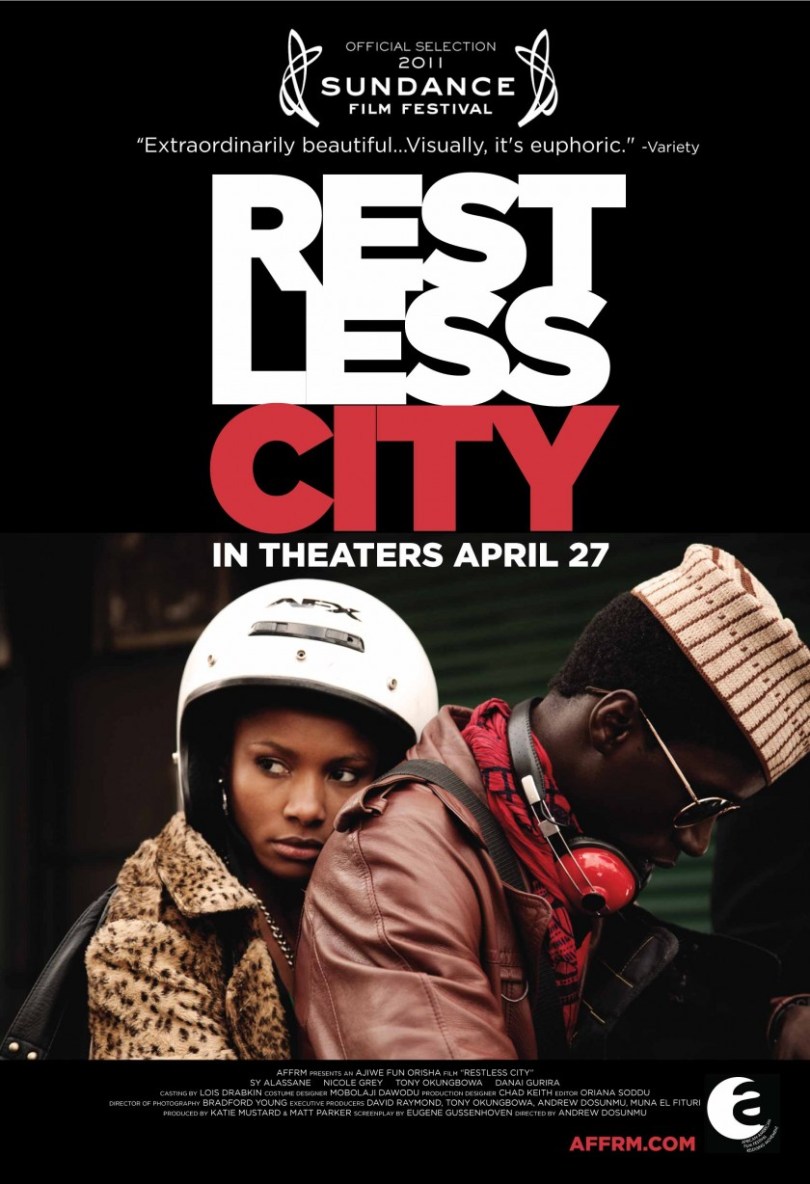
So when I first saw the trailer for Restless City, the visuals had me hooked but I also acknowledged that the I didn’t get a feel for the story without reading the written synopses.
Restless City director, Andrew Donsunmu, has quite a few creative titles associated with his name including fashion photographer and music video director. I have no doubt he knows the value of visuals in telling stories and evoking emotions. Paired with cinematographer Bradford Young, I had huge expectations of what I would get from Restless City. Just check these clips that were released in advance of the film’s opening night:
Unfortunately, after all of this visual seduction, I was a bit disappointed when I walked out of the screening. I thought the visuals were amazing but the story seemed to be lacking so much. I didn’t feel at all connected to it or moved by it. I appreciate quiet movies (Medicine for Melancholy and Donoma are two recent ones that come to mind), but the story was far too quiet and too subtle for me to really feel anything.
In the hours following the screening, I couldn’t stop thinking about my failure to connect, especially given all of the positive reactions the film received. Was my disappointment actually a projection of my idea of how a story should be told? Was the positive response to the film, a desperate need to see an alternative view of blackness on the big screen? Maybe I should give it another chance and go see it with absolutely no expectations.
I haven’t actually tried to get a film made in Hollywood… my world exists outside of that machine, for now. I have one main responsibility: to explore the depths of people, for better or worse. I want to go deeper into what makes us tick, what makes us laugh, cry, grow, grieve, evolve
I definitely respect him for what he sees as his responsibility and his rejection of Hollywood even if it’s just “for now.”
As the interview continues, he describes what he wants viewers to get out of Restless City:
I would like viewers of RESTLESS CITY to just see themselves in the characters, to feel a sense of familiarity with the story, to be curious about how it continues after the last frame. I would like viewers to feel at home in the story, to see my NY, and to understand the nuances of the NY they may never look at closely.
Now I’m back to being confused because Donsunmu’s comments suggest that he expects viewers to view this film in the same we do with other films told in a traditional manner. So I guess I wasn’t projecting my ideas of how a story should be told.
I had no curiosity about how the story continues after the last frame; however, the film did inspire thoughts about the unique experiences of African immigrants in NYC. I’ve always been curious about the vendors on 125th St, on Canal St, and in Koreatown. And given my experiences in African communities in the southern U.S., I’ve always been envious of the more developed African communities in NYC; I’ll credit Restless City for showing me some of the drawbacks and grittiness of this “development.”
I know as artists, our craft is constantly developing and evolving. So while I’m unsure if I will go see Restless City again in theater, I’m definitely going to look out for future works of Donsunmu as his craft continues to evolve. If anything, Restless City gave me enough of a taste for that.
Shame, for me, is about the illusion of public failure; it’s about the embarrassment of not reaching expectations I’ve created for myself and that I think others have of me as well. But the thing about shame, as Ms. Brown said in her talk, is that the public failure and critique that we are so ashamed of and embarrassed by is usually self conceived…
I’m not going to shy away or try to suppress my feelings of shame or embarrassment; rather I’m going to confront it head-on, allow myself to feel it, but still keep moving forward. It’s not about being tough all the time or being impervious to insecurity and self-doubt; but it’s about what you do in the midst of those feelings, at some point in time.
Literary
Did you miss Women Writers on the Horizon with Alice Walker, Sonia Sanchez, and Ruby Dee? Here’s the video.
Nnedi Okorafor was interviewed by The Africa Channel, part 1 and part 2 of the interview are on YouTube.
The Oberlin Review interviews Edwidge Danticat. She reiterates some of what she said at Artist at Work and adds a few gems.
Other
A visual recap of Accra’s Chale Wote Festival.
The song and the story of him writing this song is inspiration for anyone:
From the film’s site: Boneshaker follows a Ghanaian immigrant family taking a road trip to a Pentecostal church in Louisiana to cure their violent daughter. As the family journeys to a tent revival at the ends of the levee-less Louisiana delta, they discover the complications of trying to perform a traditional ritual away from home. Boneshaker focuses on the feelings of homelessness, landlessness, and rootlessness that accompany immigration.
More:
the video for the Kickstarter campaign that funded the film and
an interview with the director, Frances Bodomo.
I’m ready for this.
P.S. If you’re a Miranda July fan, check out this other short from Frances Bodomo:
Some tips on screenwriting from Shadow & Act (that tip on dialogue is everything, I’m learning the importance of subtlety in art)
As a writer working on a project that may be a bit self-indulgent and may be told through multiple mediums, Terence Nance is definitely an inspiration. And I relate to his idea of “the Swarm.” Read this recent S&A interview to see what all I’m talking about.
Literary:
I’ve been in a few online book clubs, none successful. But I came across an active online book club with a focus on fiction by people of color. I can’t join because of my reading schedule, but you should consider if you’re looking for a reading community.
There’s so much in this interview: beautiful photos of Toni Morrison (some with her family), proof that artists are intent on feeling our full range of emotions, and affirmation for those who have questions about love
Particularly if you come from poor communities, you come from black communities in this country and you see a casual, systemic indifference to black life…you have to respond. It’s in your own self interest, it’s not even outstanding or courageous, it’s a survival issue. Either we gonna fix this or we gonna just agree to be slaves. And that don’t honor nothing that we ever been about — it don’t honor the legacy of everybody that came before us. -Yasiin Bey





 Muse & Words